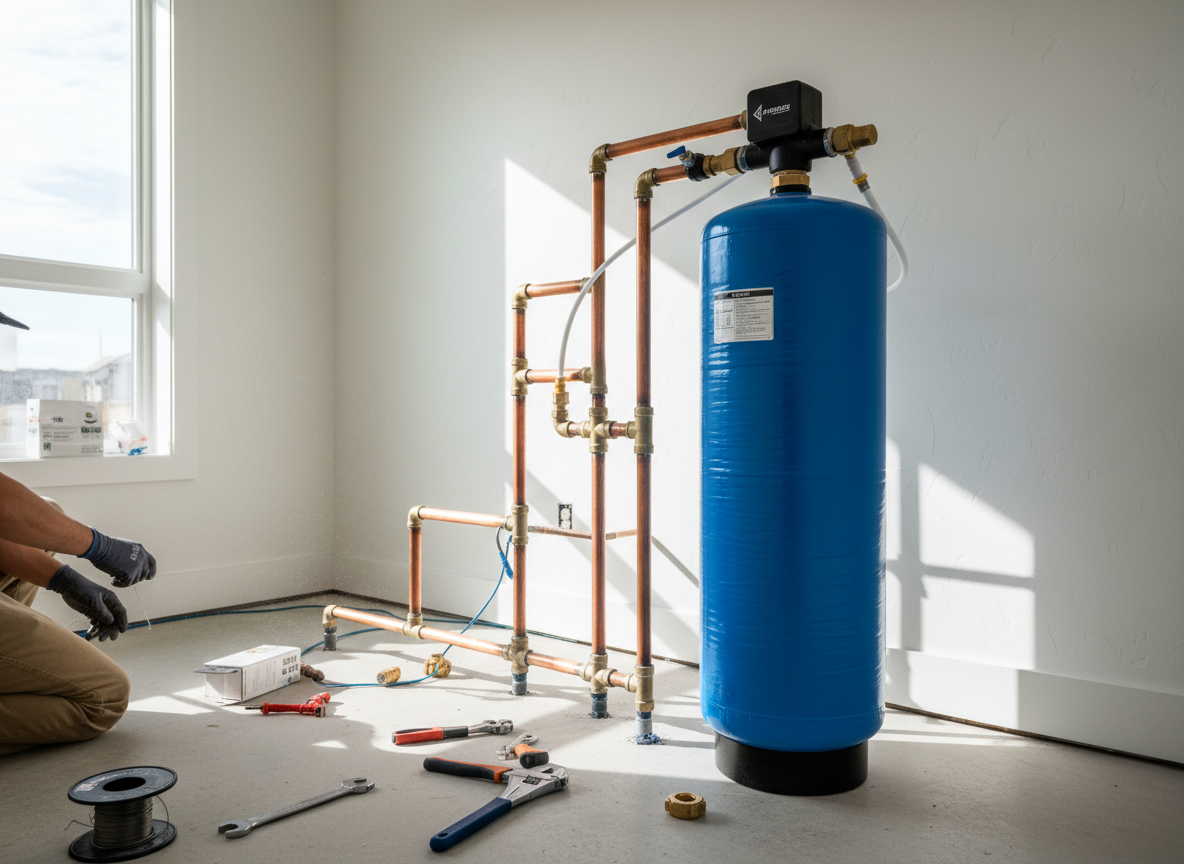
Water softener installation begins with a pressure and hardness test at the main line. In Utah County the semi-arid climate produces water with elevated mineral content that leaves scale on fixtures and appliances. The plumber locates the incoming supply, often near the pressure reducing valve already present in many Lehi homes, then cuts in a bypass loop and installs the resin tank and brine cabinet on a level pad. High municipal pressure common in the area requires a pressure-reducing valve adjustment or addition so the softener media is not damaged during regeneration cycles.
Materials typically include a metered valve head, high-capacity resin, and schedule 40 PVC or copper bypass fittings rated for the local supply pressure. Code notes in Utah County require an air gap on the brine discharge line and proper backflow protection when the unit is tied into the home’s potable system. The plumber also checks that the discharge line routes to a floor drain or approved outlet without creating a cross-connection risk during cold winters when lines can freeze if left exposed.
Homeowners in American Fork, Draper and Eagle Mountain often discover that existing PRVs set too high accelerate wear on softener valves. The installation includes verifying the PRV setting after the softener is online so the resin bed is not compacted by excessive pressure. Warnings include never placing the brine tank in unheated garages where salt brine can freeze and avoiding oversized units that exceed the home’s actual grain capacity, which wastes salt and water during each regeneration.
The referred plumber completes the final leak test and programs the valve for the measured hardness and household water use before leaving the site. Follow-up visits are scheduled only if the homeowner reports changes in pressure or taste after the first few weeks of operation.
Technician insight
In Lehi, the thing that catches most people out with Water Softener Installation is the combination of already-high municipal pressure and older homes that still have the original PRV set at 80-plus psi. When the softener goes in without resetting that valve the resin gets compacted and the control head fails early.
Water Softener Installation Services We Offer
✓Whole House Water Softener Installation
Connects a metered softener to the main supply line so every fixture receives treated water and scale buildup is reduced throughout the home.
✓Water Softener and PRV Integration
Combines softener placement with pressure-reducing valve adjustment or replacement to protect resin from high municipal pressure common in Lehi.
✓Compact Water Softener Setup for Tight Spaces
Uses a space-saving cabinet model when utility rooms or garages limit floor area while still meeting household demand.
✓Bypass Valve and Drain Line Installation
Adds code-compliant bypass piping and an air-gapped drain line so the unit can be serviced without shutting off water to the house.
✓Salt-Free Conditioner Installation
Provides an alternative template-assisted crystallization unit for homeowners who prefer reduced salt use while still addressing hardness.
How it works
- 1
Site Assessment
The plumber measures incoming pressure and hardness at the main line and notes the location of the existing PRV.
- 2
System Layout
A bypass loop and drain route are planned to keep the softener accessible and meet Utah County backflow requirements.
- 3
Tank And Valve Placement
The resin tank and control valve are set on a level pad and connected with pressure-rated fittings.
- 4
Final Programming And Test
The valve is set for local hardness, the PRV is checked, and the system is run through a regeneration cycle to confirm operation.
Pricing
pricing depends on the job and is discussed with the plumber after you call