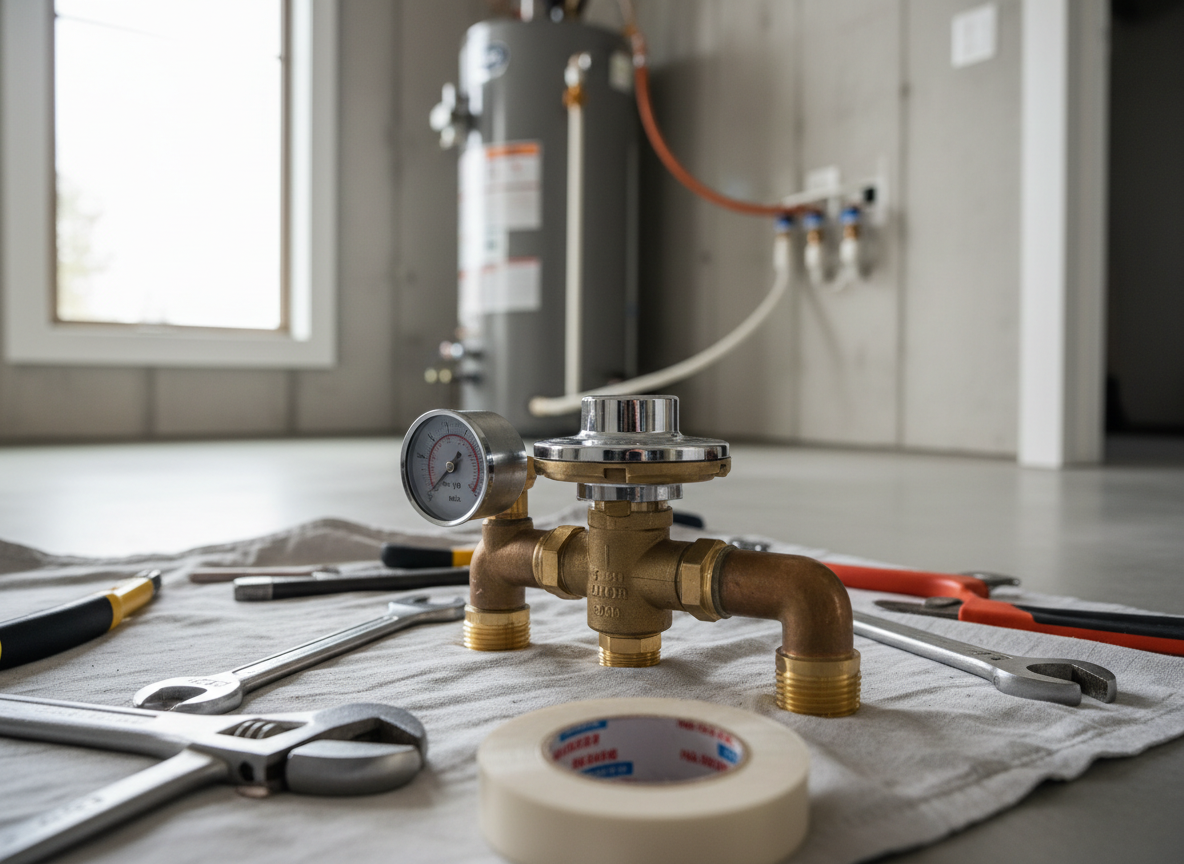
Independent plumbers handle water pressure regulator repair by first shutting off the main supply and relieving pressure in the line. They remove the old valve, inspect the threads and surrounding pipe for corrosion, then install a new regulator matched to the home's inlet pressure. In Utah County, where municipal supply often runs above 80 psi, they adjust the screw to bring downstream pressure into the 50-60 psi range before restoring water and checking every fixture.
Materials typically include a lead-free brass pressure reducing valve, new washers, and thread sealant rated for potable water. Plumbers also carry replacement strainers and pressure gauges to verify readings after installation. Hard water common in Lehi leaves mineral deposits that can lock the diaphragm or clog the bypass, so the plumber flushes the line and may recommend a whole-house filter downstream.
Utah plumbing code requires regulators on new construction and after major remodels when pressure exceeds 80 psi. Plumbers check for proper location before the water heater and ensure a thermal expansion tank is present to prevent back-pressure issues. Homeowners are warned against adjusting the valve without a gauge, as over-reduction starves upper floors while under-reduction leaves pipes vulnerable to bursts during winter freezes.
Common Warning Signs
Sudden fixture leaks, banging pipes after the water heater cycles, or inconsistent shower pressure often point to a failing regulator. ## Seasonal Considerations Cold winter temperatures in Eagle Mountain can make buried lines brittle, so plumbers advise checking the regulator before temperatures drop.
Technician insight
In Lehi, the thing that catches most people out with Water Pressure Regulator Repair is the age of the copper line right after the meter. Homes built in the 1990s often have 3/4-inch pipe that has already narrowed from hard-water scale, so simply swapping the valve without reaming the pipe leaves the pressure problem half fixed.
Water Pressure Regulator Repair Services We Offer
✓Pressure Reducing Valve Replacement
Full removal of the existing valve and installation of a new unit sized for the home's incoming pressure.
✓Regulator Adjustment Service
Fine-tuning of an existing pressure reducing valve to correct high or low pressure readings at fixtures.
✓Strainer Cleaning and Replacement
Removal of debris buildup inside the regulator strainer that restricts flow in hard-water areas.
✓Pressure Gauge Testing
On-site measurement of static and dynamic pressure before and after the regulator to confirm proper function.
✓Expansion Tank Installation
Addition of a thermal expansion tank when a new regulator is installed to protect the water heater.
How it works
- 1
Initial Pressure Check
The plumber measures incoming municipal pressure and pressure after the regulator at multiple fixtures.
- 2
Valve Access and Isolation
Main water supply is shut off and the line is drained before the regulator is exposed.
- 3
Component Replacement
The old valve is removed, threads are cleaned, and a new regulator is installed with proper orientation.
- 4
System Restoration and Verification
Water is turned back on, pressure is reset, and all fixtures are checked for leaks or flow issues.
Pricing
pricing depends on the job and is discussed with the plumber after you call