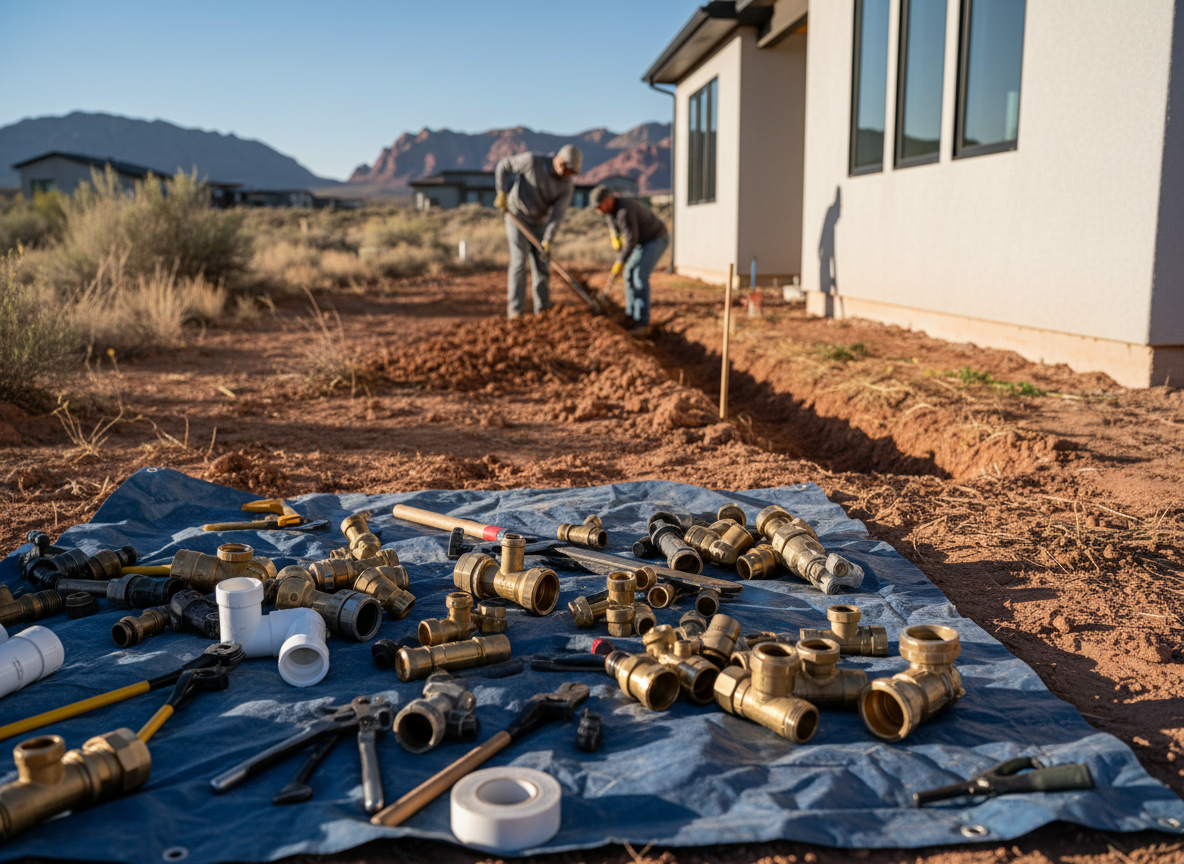
Installation begins with a site assessment that measures existing static pressure at the meter and notes soil type along with slope in Lehi yards. Plumbers then design zones sized to keep pressure under 60 psi at each head, often adding a dedicated pressure reducing valve right after the main shutoff. Pipe is selected for UV and freeze resistance, with solvent-weld or compression fittings rated for local hard water that quickly builds scale on untreated brass.
During trenching, lines are buried below frost depth and sleeved where they cross driveways. Backflow preventers are installed per Utah County code at the point of connection, and each zone valve is placed in a valve box with a manual bleed for winter blowouts. Drip lines receive pressure-compensating emitters to offset the 80-plus psi common in newer Lehi subdivisions, while spray heads use check valves to stop low-head drainage on sloped lots.
Final steps include flushing every line to clear construction debris, setting controller run times for semi-arid summer evaporation rates, and testing each zone at multiple times of day. Homeowners receive a simple diagram showing valve locations and recommended seasonal adjustments so the system stays balanced when winter temperatures drop and pipes are at risk of freezing.
Technician insight
In Lehi, the thing that catches most people out with Irrigation System Installation is how quickly hard water scale builds on zone valves when pressure stays above 70 psi; new builds on the west side often need an extra PRV right after the meter or the first summer will chew through heads.
Irrigation System Installation Services We Offer
✓Backflow Preventer Installation
Plumbers place code-compliant backflow devices at the irrigation point of connection to protect household water from lawn chemicals in Lehi homes.
✓Pressure Reducing Valve Integration
A dedicated PRV is added to the irrigation main so zone pressure stays consistent even when municipal supply spikes above 80 psi.
✓Zone Valve and Manifold Setup
Electric zone valves are grouped in accessible boxes with individual shutoffs, making seasonal winterization and repairs faster for Draper properties.
✓Drip Irrigation Layout
Pressure-compensating drip lines are run along beds and trees to deliver water slowly in Eagle Mountain's sandy soils without runoff.
✓Sprinkler Head Placement and Upgrade
Rotary or spray heads are spaced for even coverage while check valves prevent drainage on American Fork slopes common after new construction.
How it works
- 1
Site Pressure and Layout Review
The plumber measures static and dynamic pressure at the meter and sketches yard zones based on sun exposure and plant types.
- 2
Material Selection and Design
Pipe, fittings, and emitters are chosen to handle hard water scale and high pressure while meeting local backflow rules.
- 3
Trenching and Component Install
Lines are buried, valves boxed, and a PRV added where needed before heads or drip emitters are connected.
- 4
Testing and Handover
Each zone is run and adjusted, then the homeowner receives a valve map and basic winterization steps.
Pricing
Pricing depends on the job and is discussed with the plumber after you call