2026-11-12 ·
Diagnosing Low Water Pressure After Winter Freeze in Lehi East Bench Homes
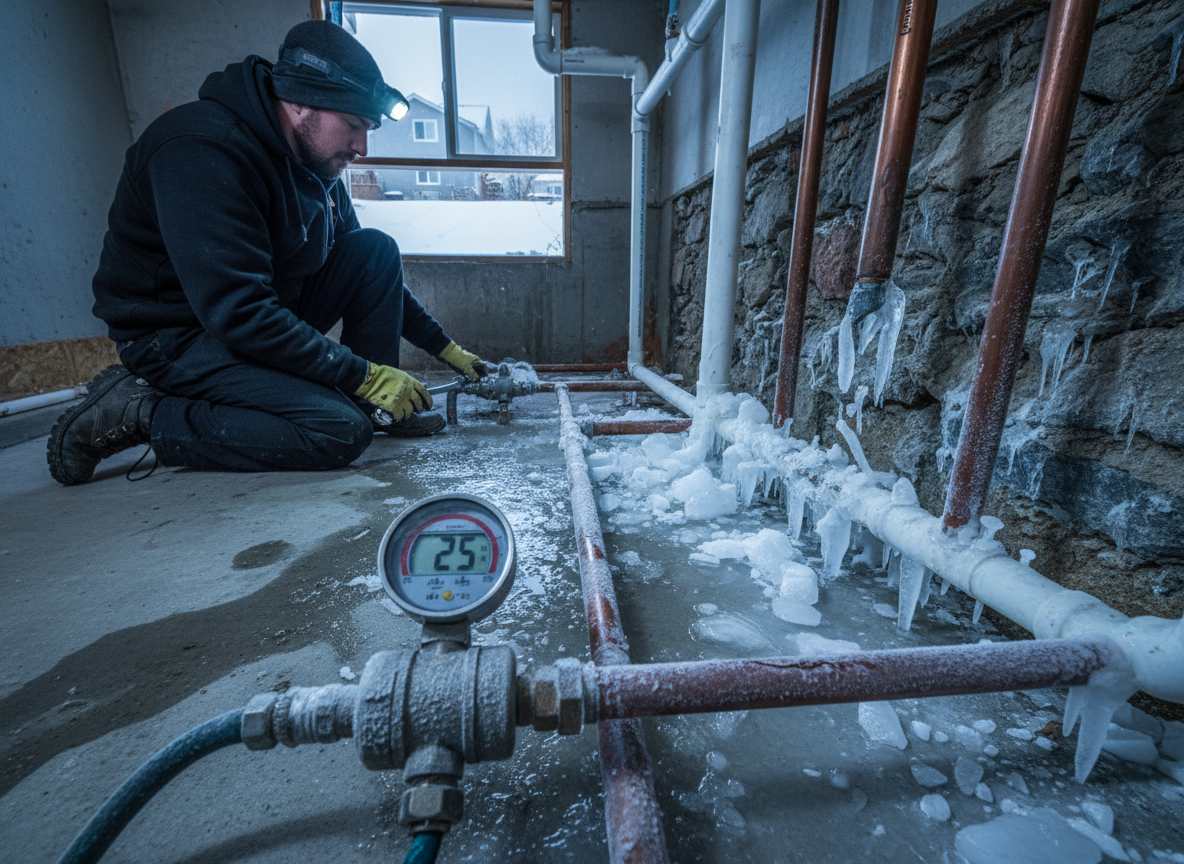
Low water pressure after a winter freeze in Lehi East Bench homes typically traces to ice restrictions inside exposed supply lines or a pressure reducing valve that no longer maintains steady output once temperatures rise above freezing.
Checking Supply Lines for Ice Blockages
East Bench properties sit at higher elevations where overnight lows drop fastest. Walk the perimeter and inspect any pipe sections that run along north-facing walls, under decks, or through unheated crawl spaces. A partially frozen line produces noticeably weaker flow at outdoor spigots first, then at indoor fixtures on the same branch. Run cold water at the highest point in the house while listening for sputtering or air pockets; these signs indicate residual ice still restricting the line. If flow improves after several minutes of continuous running, the restriction was likely ice that has now melted. Persistent low flow at every fixture points instead to the main incoming line or the pressure reducing valve near the water meter.
Homeowners in subdivisions east of I-15 frequently encounter this pattern because many service lines were installed with minimal insulation during earlier building phases.
Inspecting the Pressure Reducing Valve
A pressure reducing valve exposed to repeated freeze-thaw cycles can develop internal scoring or a stuck diaphragm that prevents full opening once temperatures moderate. Locate the valve, usually near the main shutoff where the city line enters the home. Note whether the valve body feels unusually cold compared with adjacent piping; this temperature difference often marks the spot where flow is throttled. Turn a downstream faucet to full open and observe the gauge if one is installed, or use a simple pressure test gauge screwed onto an outdoor hose bib. Readings that remain below the 40-60 psi range typical for Lehi after the line has thawed indicate the valve needs attention.
See the related guide on testing procedures near Thanksgiving Point for step-by-step gauge use without specialized tools.
Differentiating Valve Failure from Hidden Leaks
After confirming the pressure reducing valve is not frozen, check for leaks that may have developed when ice expanded joints. Examine water heater inlet connections, toilet supply lines, and any visible copper or PEX runs in the basement. A slow leak downstream of the valve can drop household pressure without obvious puddling if the water is evaporating or draining into a sump. Compare flow rates at multiple fixtures simultaneously; if pressure drops further when two faucets run together, the restriction is upstream of the branch splits.
Leak detection services can pinpoint subsurface issues common in East Bench clay soils that shift during freeze-thaw cycles.
Local Factors Specific to Lehi East Bench
Lehi’s semi-arid climate produces wide daily temperature swings that stress older pressure reducing valves more than steady cold climates do. Many homes built before 2005 in the benches still have original valves never adjusted for the higher static pressure supplied by the city’s canyon sources. In addition, shallow burial depths on some service lines allow frost to reach the pipe even when air temperatures only briefly dip below 20 °F. Documenting which fixtures lose pressure first helps narrow whether the problem is branch-specific or system-wide.
Further reading on subdivision-specific conditions appears in the article covering local factors affecting pressure reducing valve replacement in Lehi subdivisions.
Next Steps After Diagnosis
Once the affected component is identified, note the valve manufacturer and model number stamped on the body for the referral service. Photograph exposed pipe sections and any insulation gaps before temperatures drop again. These details allow targeted repair rather than broad exploratory work. Regular seasonal checks of the pressure reducing valve and vulnerable piping remain the most reliable way to prevent repeat episodes after each winter freeze.